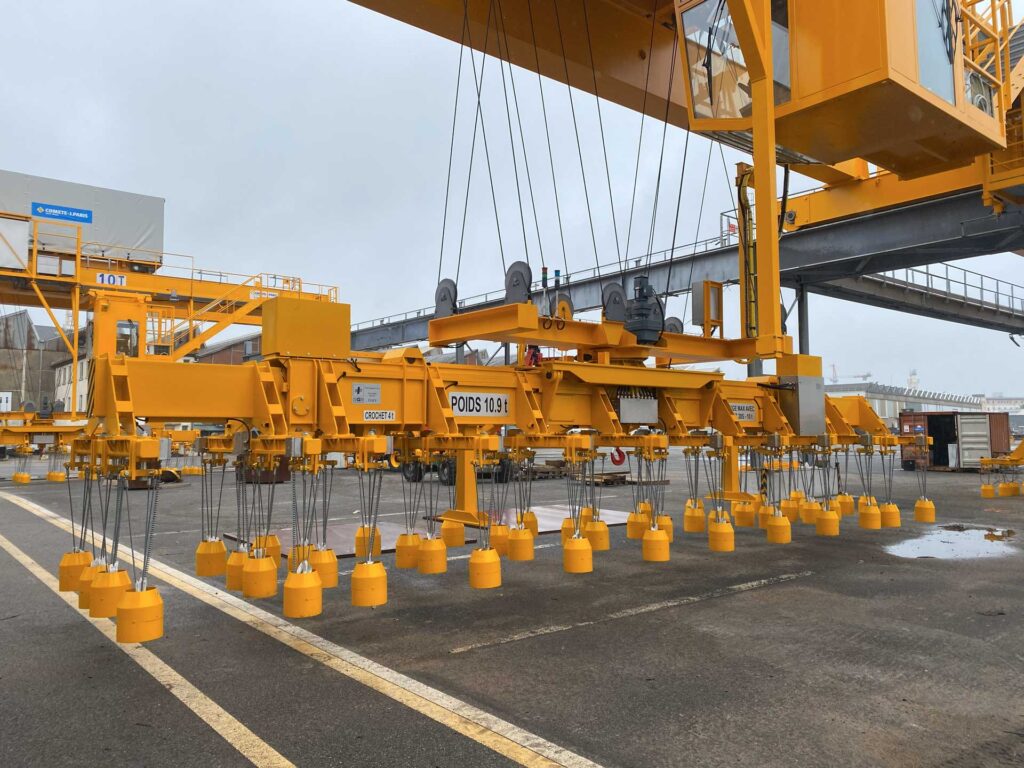
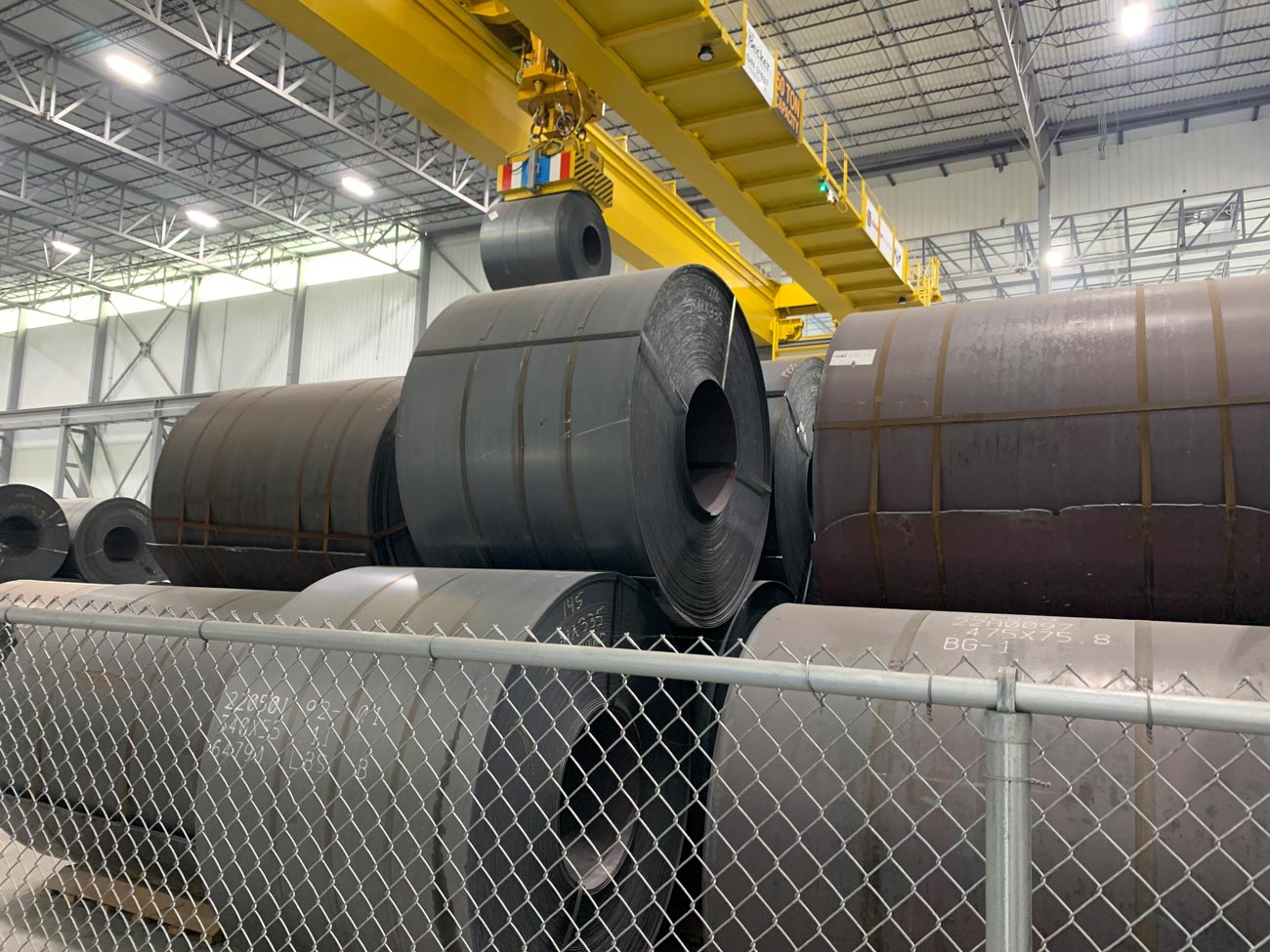
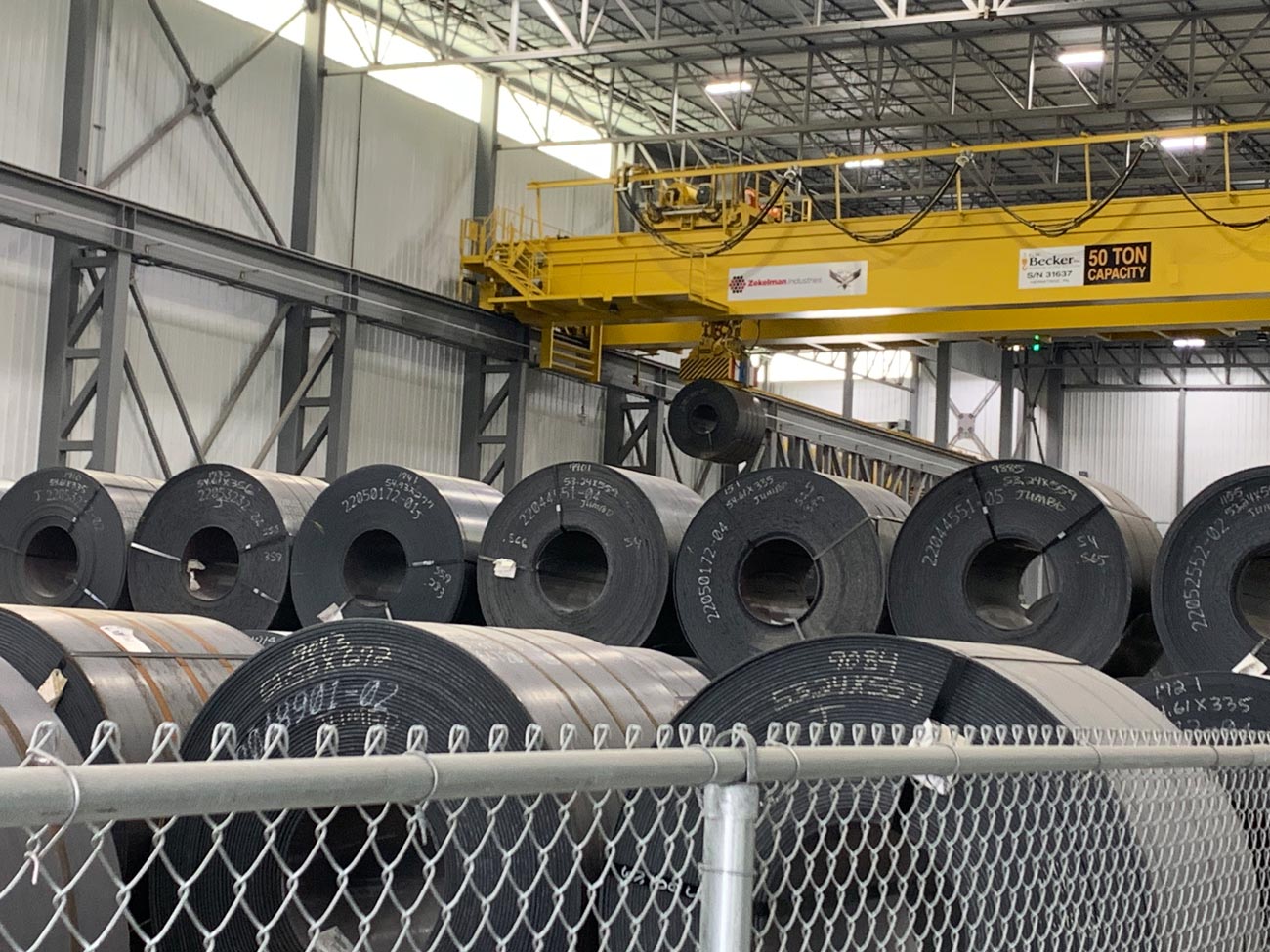
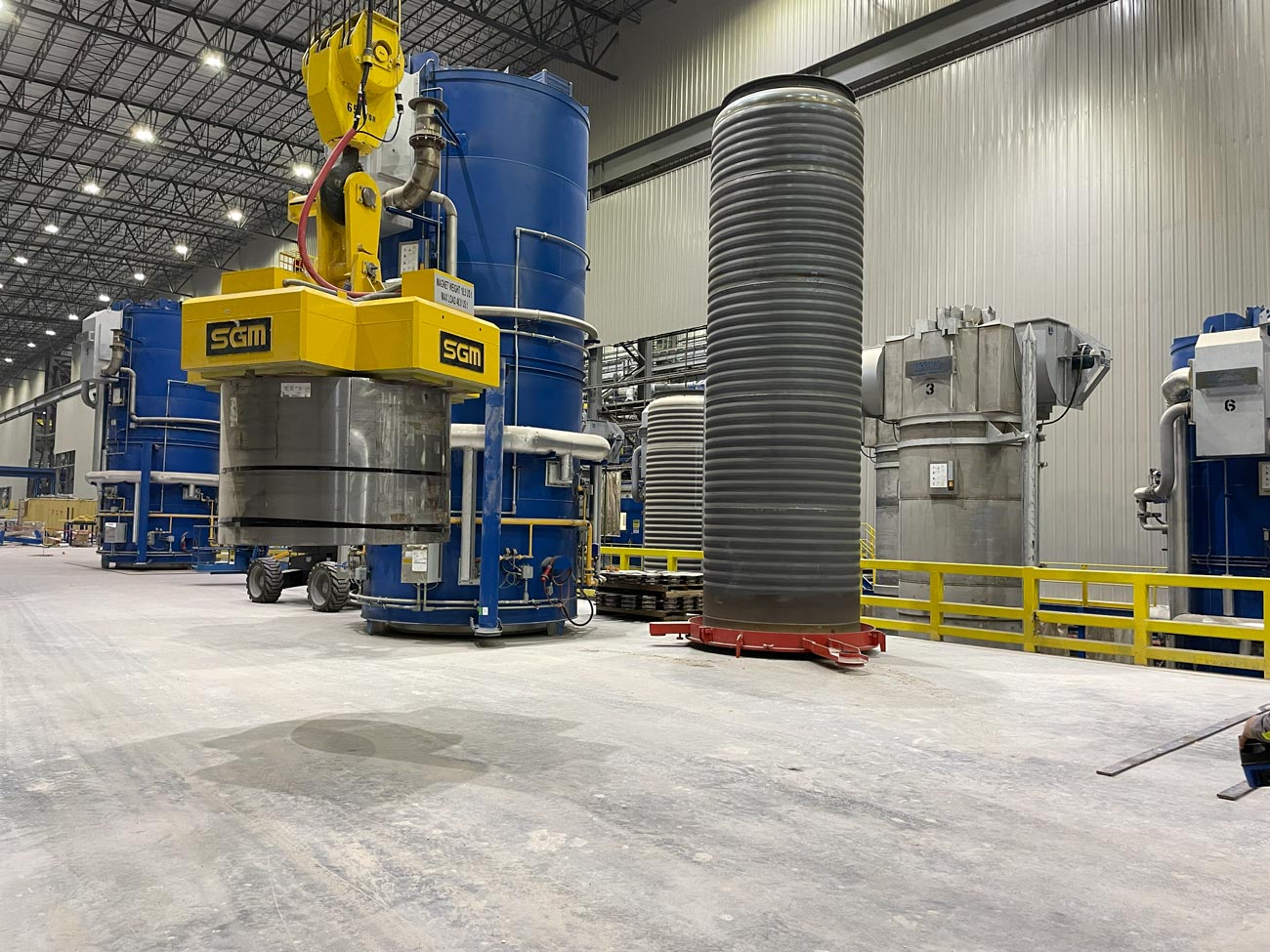
Manage complex coil handling operations with SGM lifting magnet systems, engineered to safely lift steel coils in both horizontal and vertical positions with high operational reliability.
Steel coil handling is a critical process in modern steel plants aiming to increase productivity while maintaining strict safety and quality standards. Facilities routinely manage hot rolled coils (HRC), cold rolled coils (CRC), coated materials and electrical steel (GOES), often in demanding production environments.
These coils are frequently supplied to high-performance sectors such as automotive and construction, where surface quality requirements are extremely stringent. In such contexts, impacts, local deformation or improper gripping can result in material rejection, customer claims and increased operational costs.
SGM coil lifting magnets are engineered to provide stable and repeatable gripping conditions throughout the entire handling cycle. The magnetic circuit is designed to ensure uniform force distribution and controlled contact, reducing the risk of surface damage while maintaining high operational efficiency.
In the following sections, we explain how SGM technology supports safer coil handling operations and contributes to improved process continuity in steel plants.
Why use SGM lifting magnet systems in steel plants
Coil handling in modern steel plants requires application-specific lifting systems, as each production phase imposes different constraints in terms of safety, material integrity and operating conditions.
Traditional C-hooks, chains or mechanical clamps can be effective in certain applications, but maintaining consistent gripping quality can be challenging, particularly when handling surface-sensitive materials. Cold rolled and coated coils require controlled contact to avoid surface marking, while hot rolled coils may demand lifting systems capable of operating at elevated temperatures and under intensive duty cycles.
To address these different operational requirements, SGM Magnetics has developed two core lifting technologies, enabling precise selection of the most suitable technology for each specific production scenario:
- Electro-permanent magnets (EPR) for handling cold rolled or galvanized coils, where controlled magnetic activation and optimized pole design ensure stable gripping conditions and significantly reduce the risk of surface marking on high-value materials;
- Electromagnets (EM) engineered for high-temperature environments and continuous-duty cycles, providing reliable lifting performance from rolling mill discharge to storage and shipping areas.
The adoption of application-specific magnetic lifting technologies also enables:
- Replacement of mechanical gripping systems in selected applications, reducing the use of hooks and chains and improving operational safety;
- Standardized coil handling procedures across different plant areas, improving operational consistency and throughput.
SGM lifting systems are designed in compliance with relevant standards such as EN 13155, supporting safe and reliable coil handling in internal logistics operations.
Do SGM lifting magnets prevent coil surface damage?
In high-quality applications, surface protection is one of the most critical factors in coil handling. Scratches, pressure marks or improper gripping can make cold rolled or coated coils unsuitable for downstream processes, particularly in automotive or appliance sectors where surface finish requirements are extremely strict.
SGM lifting magnets are engineered to minimize the risk of surface damage through controlled top-side gripping and optimized pole design. The magnetic contact is concentrated on structural areas of the coil rather than exposed surface zones, reducing the likelihood of visible marking during handling.
Magnetic force is distributed evenly across the contact area to avoid localized pressure points. This is particularly important for coils intended for galvanizing or further surface treatment, where even minor imperfections can lead to quality issues during inspection.
Electro-permanent technology also provides intrinsic holding stability. In the event of a power failure, the magnetic force remains constant, ensuring load retention without relying on continuous power supply. This contributes to safe handling conditions and helps prevent impact-related damage caused by accidental load drops.
Finally, the absence of continuous power supply in electro-permanent systems reduces residual magnetization effects at release, limiting the attraction of ferrous particles that could cause micro-scratches during subsequent processing stages.
Main benefits of coil lifting magnets for steel plants
Evaluating a coil lifting system means assessing its impact on overall plant performance, not just its lifting capacity.
Operator safety, workflow continuity and on-time delivery all depend on how efficiently internal handling operations are managed. Magnetic lifting systems are designed to reduce manual interventions under load and optimize crane utilization across different plant areas.
Among the main benefits of coil lifting magnet systems:
- Improved operational safety, reducing operator exposure to suspended loads and minimizing manual rigging activities;
- Protection of material quality, through controlled magnetic gripping compatible with sensitive and coated surfaces;
- Enhanced process continuity, supporting consistent handling from rolling to pickling and final dispatch;
- Operational flexibility, accommodating variations in coil weight, diameter and temperature without requiring structural changes to internal logistics.
These advantages translate into greater process reliability and more stable operating costs, transforming coil handling from a simple logistics task into a controlled and performance-driven operation.
For technical consultation on coil lifting systems, SGM engineering teams support the design of application-specific solutions based on plant requirements.
You might also be interested in
Steel coil lifting magnets for steel plants, how they work
Why choose LIBS laser sorting for aluminum scrap