Municipal solid waste management represents one of the most demanding environmental challenges facing modern cities and waste treatment facilities. MSW can include paper, plastics, glass, metals, and organic waste, whether collected separately or as mixed waste.
Determining whether municipal solid waste inherently includes recyclable materials is essential for structuring modern circular economy workflows. However, not all municipal waste can be recycled, and the materials recovered depend on collection methods, waste composition, and available treatment technologies.
Understanding how municipal solid waste recycling works helps explain the role of different sorting processes, including the technologies used to recover ferrous and non-ferrous metals.
What materials can be recycled from municipal solid waste?
Municipal solid waste contains different material fractions, some of which can be recovered and returned to production processes.
Depending on the waste collection and treatment system, recyclable materials may include:
- Paper and cardboard: Collected and processed for use in new paper products.
- Plastics: Selected and sorted by polymer type and other characteristics for further recycling.
- Glass: Separated and processed for use as a raw material in glass production.
- Ferrous metals: Steel packaging and other iron-containing materials that can be recovered through magnetic separation.
- Non-ferrous metals: Aluminum packaging and other conductive metals that can be recovered using appropriate separation technologies.
- Organic waste: Suitable food and green waste that can be treated through composting or anaerobic digestion.
The actual recovery potential depends on factors such as contamination levels, material characteristics, and the sorting technologies available.
How is municipal solid waste sorted for recycling?
Municipal solid waste recycling may involve several mechanical and automated sorting stages to separate recoverable materials from mixed waste.
The configuration of a treatment facility depends on the composition of the incoming material, the collection system, and the required quality of the recovered fractions.
Common processing stages include:
- Bag opening and screening: Preparing mixed waste for further sorting and separating materials into different size fractions.
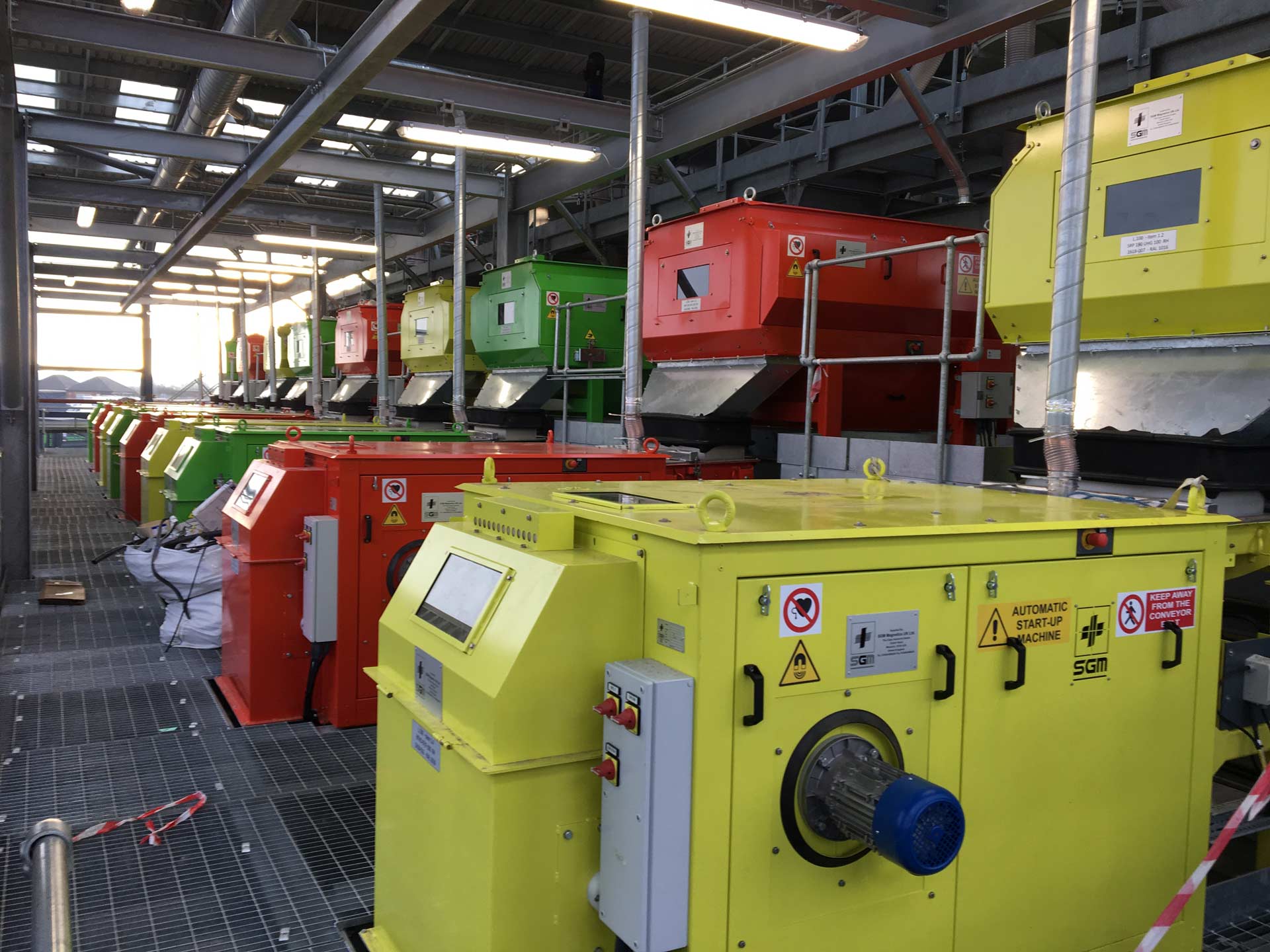
- Magnetic separation: Recovering ferrous metals, including steel packaging and other iron-containing materials.
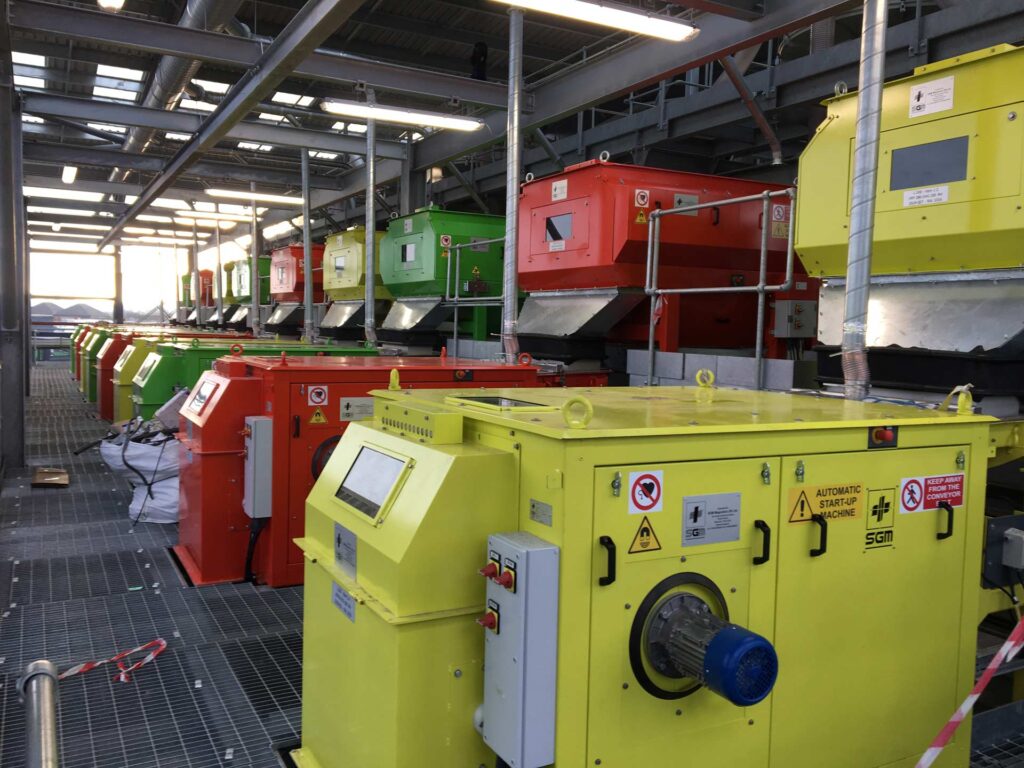
- Eddy current separation: Separating conductive non-ferrous metals, particularly aluminum, from non-metallic materials.
- Optical and sensor-based sorting: Identifying selected materials, such as specific plastics or residual metal fractions, using suitable detection technologies.
- Quality control: Removing unwanted materials to improve the quality of recovered fractions before further processing.
These operations can be combined in different ways depending on the objectives of the facility. There is no single processing sequence suitable for every municipal waste stream.
How are metals recovered from municipal solid waste?
Metal recovery is one of the applications of separation technologies in municipal solid waste recycling.
Ferrous and non-ferrous metals can be extracted from suitable waste streams through different technologies, depending on their physical and electromagnetic properties.
Ferrous metal recovery
Ferrous metals, such as steel cans and other iron-containing materials, can be recovered using magnetic separators.
Overband magnets and magnetic drums are commonly used to separate magnetic materials from mixed waste streams. Depending on their position in the process, these systems can recover recyclable ferrous fractions and help remove unwanted metal objects before downstream equipment.
Non-ferrous metal recovery
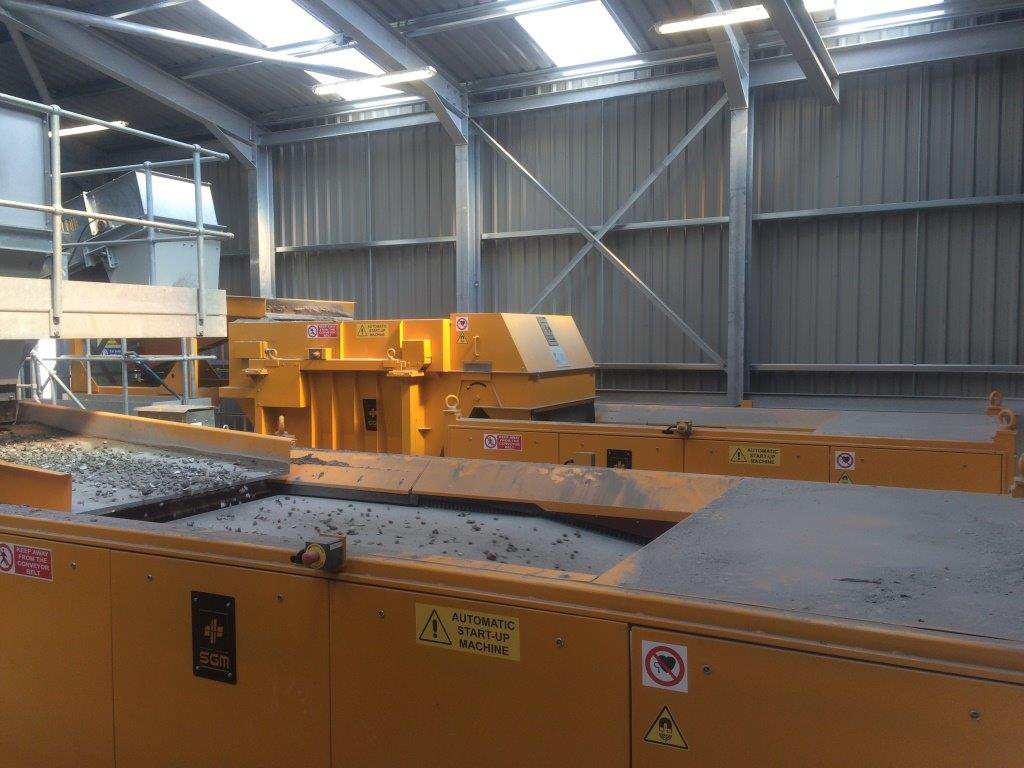
Non-ferrous metals, particularly aluminum, can be recovered using eddy current separators.
These systems generate a rapidly changing magnetic field that induces eddy currents in electrically conductive non-ferrous materials. The resulting repulsive force enables their separation from non-conductive materials.
Eddy current separation is widely used to recover aluminum packaging and other suitable non-ferrous metal fractions from processed waste streams.
In certain applications, induction sensor-based sorting can provide an additional recovery stage for residual metal particles, including some stainless steel grades that are not effectively separated by conventional magnetic or eddy current systems.
The effectiveness of each technology depends on factors such as particle size, material composition, throughput, and the required purity of the recovered fraction.
For further information, read our guide on how to separate non-ferrous metals with eddy current separators.
What happens to municipal waste that cannot be recycled?
Not all municipal solid waste can be recovered through material recycling.
After recyclable fractions have been separated, the remaining waste may undergo different treatment processes depending on its composition and applicable regulations.
These can include:
- Biological treatment: Composting or anaerobic digestion of suitable organic waste to produce compost or biogas.
- Energy recovery: Using suitable non-recyclable combustible fractions to generate heat or electricity.
- Refuse-derived fuel production: Processing eligible combustible waste into RDF or solid recovered fuel (SRF), subject to the relevant quality specifications.
- Landfilling: Disposing of residual waste that cannot be recovered or treated through other available methods.
Separate collection and appropriate handling are also necessary for hazardous household waste, batteries, and certain electrical and electronic equipment.
Waste management strategies generally prioritize prevention, preparation for reuse, and recycling, followed by other recovery operations and, where necessary, disposal.
For regulatory guidance regarding electronic components in municipal streams, consult our review on WEEE & E-Waste Directives in Europe: Recovery & Sorting Solutions.
The role of SGM separation technologies in municipal solid waste recycling
In municipal solid waste treatment, magnetic and eddy current separation technologies can contribute to the recovery of recyclable metal fractions.
SGM Magnetics supplies magnetic separators for ferrous metal recovery and eddy current separators for non-ferrous metal separation. Sensor-based sorting solutions can also be considered for specific applications where additional metal recovery is required.
The selection and integration of these technologies depend on the characteristics of the waste stream, processing requirements, and downstream recycling objectives.
Looking for metal separation equipment for a municipal waste recycling application?
Contact SGM Magnetics to discuss suitable separation technologies for your material and processing requirements.
You might also be interested in
How Does municipal solid waste work?
Electro Permanent Lifting Magnets: Benefits & How They Work | SGM Magnetics